
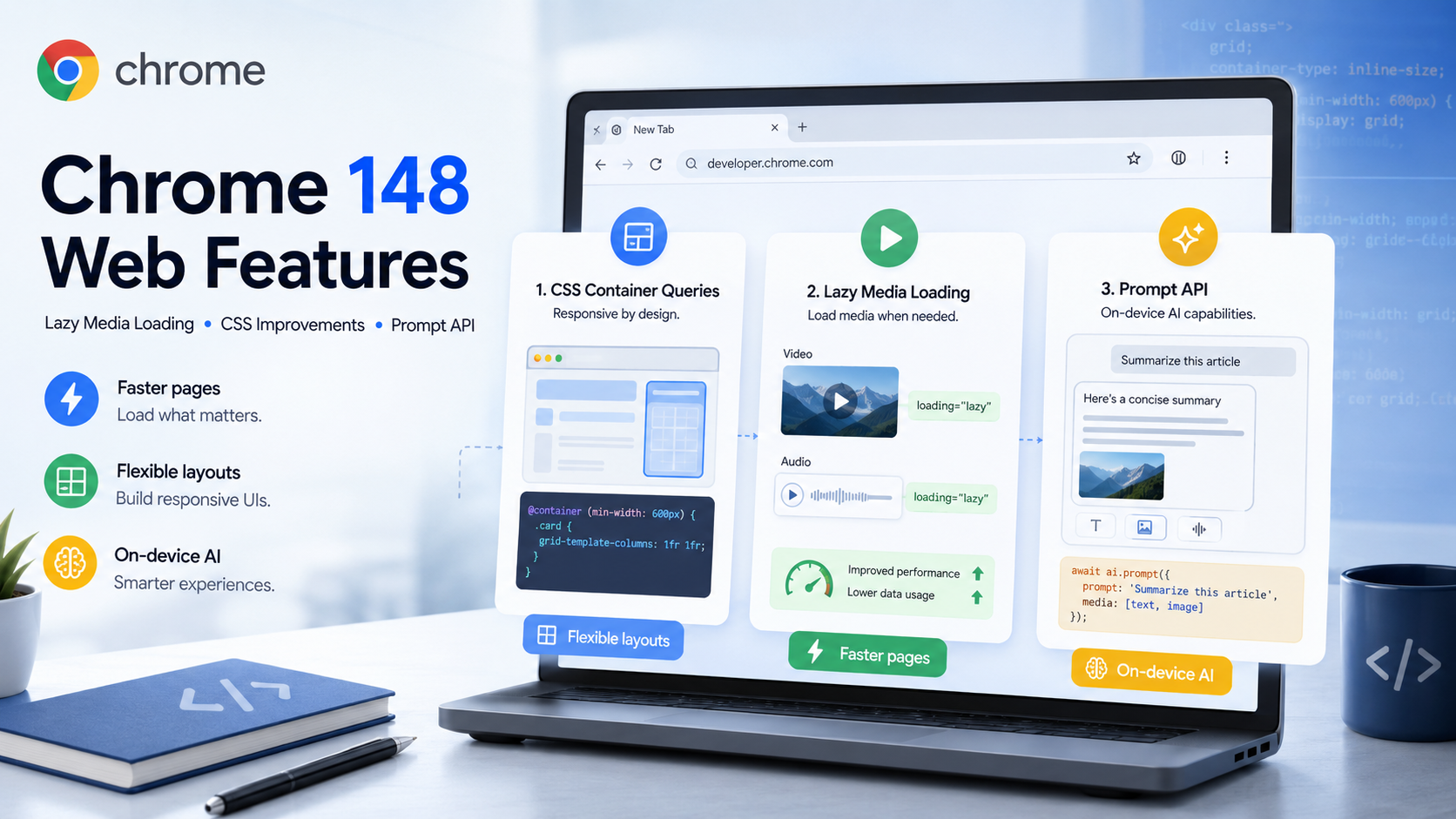
Chrome 148 introduces several web platform features aimed at performance, layout flexibility and AI-powered development. Google's developer blog highlighted three major additions: CSS name-only container queries, lazy loading for video and audio elements, and the Prompt API.
CSS name-only container queries allow developers to query a container by its name without also setting a container type. This gives front-end teams more flexibility when building responsive components, particularly in design systems where named containers are easier to reason about across many pages or templates.
The new lazy-loading support for video and audio elements brings media closer to the behavior developers already know from images and iframes. By using loading="lazy", developers can defer loading media resources until they are near the viewport. That can improve page load performance, reduce unnecessary data use and help pages feel faster, especially on mobile networks or media-heavy sites.
Chrome 148 also advances Google's built-in AI direction with the Prompt API. The API gives developers access to a browser-provided on-device language model in supported configurations. Google says the initial implementation supports text, image and audio inputs, with response constraints such as regular expressions and JSON schema formats. That makes it relevant for tasks such as captions, transcription, classification and structured information extraction.
Beyond the highlighted features, Chrome 148's release notes list additional changes including SharedWorker support on Android, extended-lifetime shared workers, Secure Payment Confirmation capability detection, WebGPU improvements and performance-related APIs.
The release shows Chrome's dual role as both a consumer browser and a developer platform. For users, these changes can translate into faster pages and more capable web apps. For developers, they create new ways to build responsive interfaces, efficient media experiences and AI-enhanced features directly in the browser.