
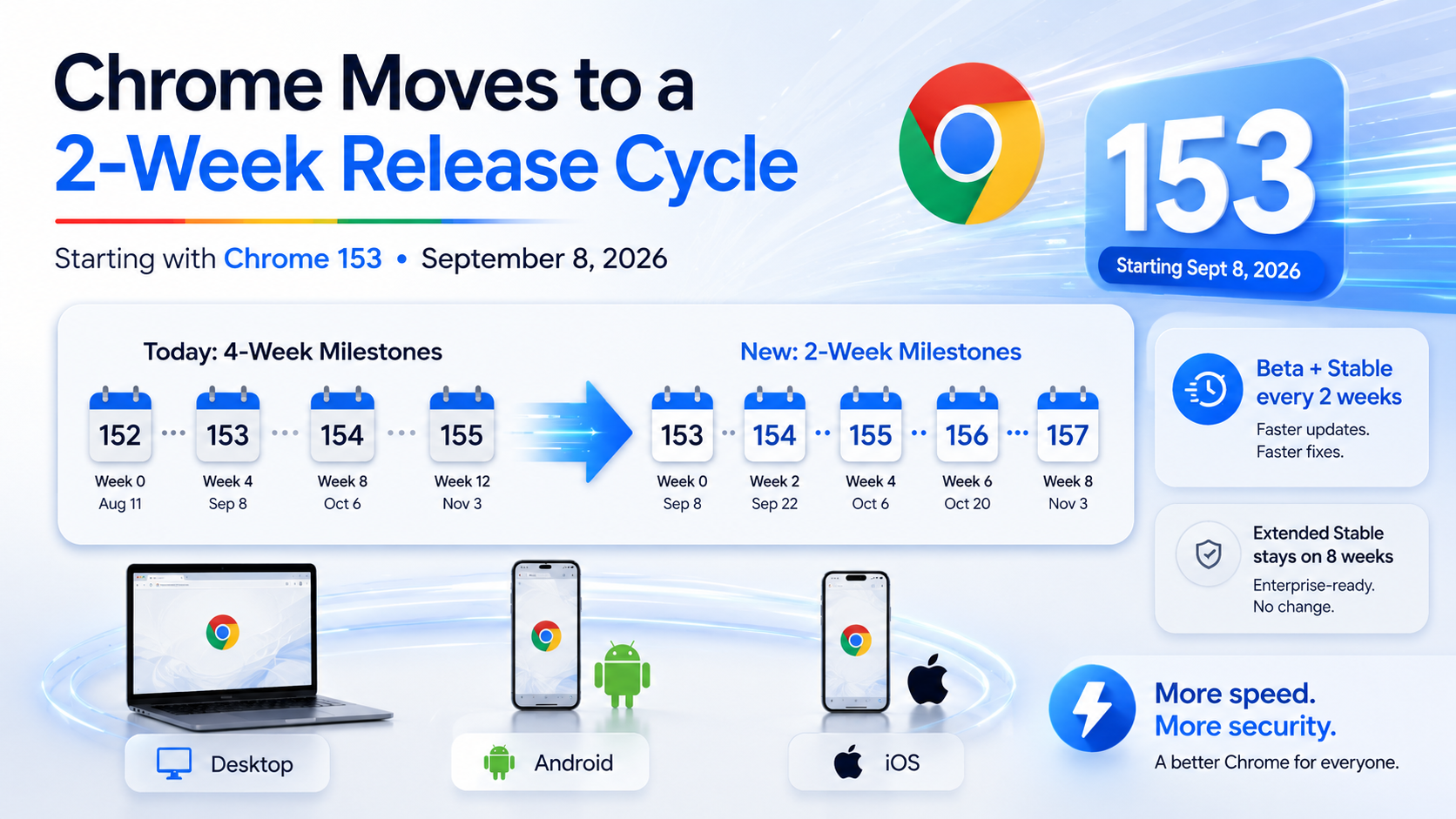
Google has announced that Chrome will move from a four-week milestone release cycle to a two-week release cycle starting in September 2026. The change begins with the stable release of Chrome 153 on September 8, 2026 and applies to desktop, Android and iOS.
Google says the goal is to deliver performance improvements, fixes and new capabilities more quickly while keeping releases smaller in scope. Chrome has used a four-week milestone rhythm since 2021, and Google later added weekly security updates and an early stable release to reduce patch gaps and improve quality. The new schedule represents another step toward faster browser delivery.
For users, the change should mean that new Chrome features and improvements arrive more frequently. For developers, it means testing routines may need to become more continuous. Web teams that currently verify sites only around major browser milestones may need to rely more heavily on Chrome Beta, automated test suites and compatibility monitoring.
Google says Dev and Canary channels will not change, while Beta and Stable will ship every two weeks. Extended Stable will continue on its existing eight-week cycle, which is important for enterprise administrators and Chromium embedders that need more time to manage updates.
The shift reflects how central browsers have become to daily computing. Chrome is no longer just a page viewer; it is a platform for apps, identity, payments, AI features, graphics, media, device access and enterprise work. Faster release cycles help Google respond to that pace, but they also increase the importance of good update management.
For most users, the change should happen in the background. For businesses and developers, it is a planning signal: Chrome updates are about to become more frequent, and compatibility testing should become part of a regular operational rhythm.